Both options get the job done. A dumpster rental and a junk removal service can both clear out a property — they just do it differently, and one will fit your situation better than the other.
This isn’t a case where one option is always better. It comes down to the type of project you’re running, how much physical work you want to do yourself, and what your property can actually accommodate.
Here’s an honest breakdown of both.
How Each One Works
Junk removal: You schedule an appointment, a crew shows up with a truck, and they load everything themselves. The job is typically done in a few hours. You don’t move anything, sort anything, or make multiple trips. When the crew leaves, the space is clear.
Dumpster rental: A company drops a container at your property, usually for 5-10 days. You fill it yourself on your schedule, and they pick it up when you call. You handle all the loading — the rental company only handles delivery, pickup, and disposal.
Where Dumpster Rental Makes Sense
Dumpster rentals are the right call for extended projects where debris accumulates gradually over several days or weeks. Common examples:
- Full home renovation or gut remodel that spans multiple weeks
- Roofing or siding replacement where debris builds up over several days
- DIY demolition projects where you’re doing the work yourself in phases
- Large landscaping jobs that generate ongoing green waste over time
If you’re doing the physical work yourself and need a place to put debris as you go, a dumpster makes that workflow easier.
Where Junk Removal Makes More Sense
For most residential cleanouts, junk removal is the cleaner option. Here’s when it wins:
- You’re not doing the physical work yourself. You hired a service specifically to avoid lifting and hauling — a dumpster still requires you to load it.
- The job is a one-day cleanout. Garage, estate, rental turnover, storage unit — these are single-session jobs. There’s no reason to rent a container for 10 days.
- You have a mixed load. Furniture, appliances, boxes, yard debris, and household junk all in one job. A junk removal crew handles all of it in one trip.
- Your property can’t accommodate a dumpster. Small driveways, HOA restrictions, steep or narrow access roads, and tight lots can make dumpster placement impractical or impossible.
- You have appliances to remove. Refrigerators, washers, dryers, and other appliances often require special handling and can’t simply be tossed in a dumpster without triggering extra fees.
A good practical approach for DIY demo projects: as you work, stage everything in a central pile — or several piles around the property if the job is spread out. Once the demo is done, call a junk removal company to come handle the haul-out in a single session. You do the work on your schedule, they clear it fast when you’re ready.
The Real Cost Comparison
Dumpsters can look cheaper on paper until you add everything up.
The base rental fee covers delivery, pickup, and a set number of days — typically 5 to 10. But several common scenarios push that number higher:
- Project delays. If your renovation runs long or your contractor falls behind, you’ll pay extension fees for every day the dumpster sits on your property past the rental period. Those fees add up fast on a project that slips by a week or two.
- Weight overages. Most rentals include a weight allowance. Heavy materials like concrete, roofing debris, or soil can push you over that limit quickly, triggering per-ton overage fees.
- Overfilling. If debris stacks above the fill line, the dumpster can’t be transported safely. The company may refuse pickup until it’s corrected — or charge an overfill fee. In some cases, a second dumpster is required.
- Prohibited items. Mattresses, tires, appliances with refrigerant, and other restricted materials often trigger per-item surcharges if they end up in the dumpster.
- Permit fees. If the dumpster needs to sit on a public street, many municipalities require a permit — an added cost that varies significantly by location.
There’s also the cost of your own time and labor. Filling a dumpster isn’t passive — you’re moving everything yourself. That’s fine if the project calls for it. But if the goal is to get out of the physical work, a dumpster doesn’t actually accomplish that.
Junk removal pricing is straightforward: based on volume, confirmed before loading starts, no hidden fees for weight, rental period, or item type.
A Few Questions to Help You Decide
Run through these before you book either option:
- Is this a one-day job or a multi-week project? One day: junk removal. Multi-week: dumpster.
- Are you doing the physical loading yourself? If not, a dumpster doesn’t save you much.
- Does your property have a flat, accessible spot for a 10-14 foot container? If placement is complicated, junk removal sidesteps the problem.
- Is your timeline firm? If the project could run long, the cost of a dumpster rental is harder to predict.
- Do you have appliances, mattresses, or other restricted items? These need to be handled separately from most dumpster rentals.
The Bottom Line
Dumpsters work well for extended, self-managed projects. Junk removal works well for everything else — cleanouts, estate jobs, single-session hauls, and any situation where you don’t want to do the loading yourself.
If you’re dealing with a mixed load, a tight timeline, or a property that doesn’t have great staging space, a crew with a large truck is usually the faster and cleaner solution.
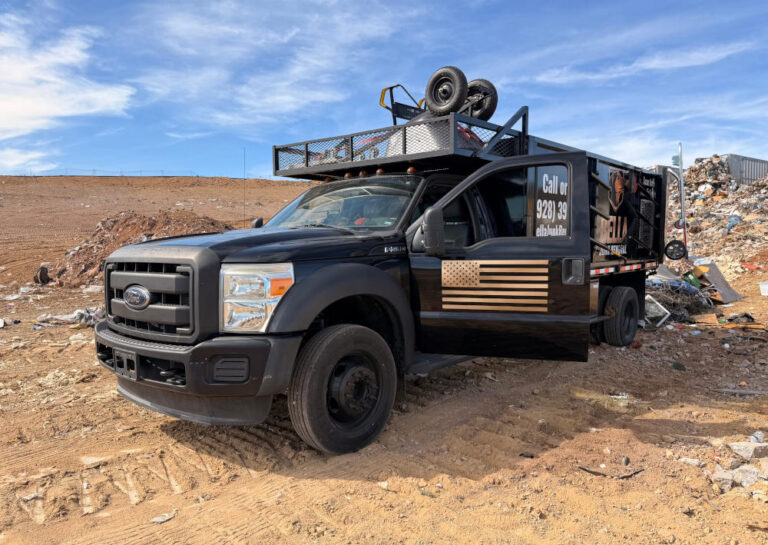
Bella Junk Removal serves Camp Verde, Cottonwood, Sedona, Rimrock, Clarkdale, Cornville, and the surrounding Verde Valley. Our dump truck handles up to 20 cubic yards in a single load — most jobs are done in a few hours.
Contact us at (928) 395-6441 or visit bellajunkremoval.com to request an estimate.