Most batteries should not go in your trash can or recycling cart, and different types often go to different drop-off spots around Camp Verde, Cottonwood and Sedona. Find your battery below for a quick answer, how to prep it and where to try first.
Jump to your battery:
- Car battery
- AA, AAA, C, D and 9-volt
- Phone, laptop and other lithium-ion
- Cordless tool packs
- E-bike and scooter batteries
- Golf cart and marine batteries
- Swollen, damaged or hot batteries
- Button and coin cells
- How Bella Junk Removal handles batteries
Always call ahead. Store and drop-off policies change often: what they accept, how many, which types and whether there is a fee. Call before you go to save a wasted trip.
Quick answers: battery disposal by type
| Battery type | Trash OK? | Where to try locally (call ahead) | Prep |
|---|---|---|---|
| Car, truck, mower (lead-acid) | No. Illegal in Arizona landfills | Auto parts stores; the store where you buy a new one; your local transfer station | Keep upright in a plastic tub |
| AA, AAA, C, D, 9-volt (alkaline) | Allowed in most communities per EPA; recycling is better | Clarkdale Public Works; Sedona household hazardous waste event (if eligible) | Tape 9-volt terminals |
| Phone, laptop, lithium-ion | No | Loose batteries: retail battery bins or Clarkdale Public Works. Built-in: electronics recycling | Tape or bag; do not pry out built-in batteries |
| Cordless tool packs | No | Home improvement store battery bins; Clarkdale Public Works | Remove from tool; tape terminals |
| E-bike, scooter, hoverboard | No | Manufacturer or dealer | Never open the pack |
| Golf cart, marine | No | Lead-acid: auto parts stores or dealer. Lithium: manufacturer or dealer | Keep upright |
| Swollen, leaking or hot (any) | No | Call the manufacturer and a household hazardous waste program | Isolate in sand or kitty litter |
| Button and coin cells | No | Clarkdale Public Works; Sedona household hazardous waste event (if eligible) | Tape both sides; keep from kids |
| Vapes | No | Household hazardous waste collection | Leave the battery inside |
Emergency: swollen, leaking or hot battery
If a battery is smoking, popping or on fire, get everyone out and call 911. Do not try to fight it yourself.
Lithium battery fires can burn hotter and longer than ordinary fires and can reignite (Battery Safety Now: FAQs). For a battery that is bulging, leaking, hot, smelly or discolored but not burning (EPA tip sheet):
- Stop using and charging it (Battery Safety Now: Damaged Batteries).
- Move it away from anything flammable. If you can do it safely, set it in sand or kitty litter in a non-metal container (The Battery Network).
- Keep it out of the trash, water, your curbside cart and retail drop-off bins. Most retail bins are not set up for damaged batteries.
- Call the battery or device manufacturer for disposal instructions (EPA).
- Ask a household hazardous waste program whether it takes damaged batteries. Battery Safety Now says these sites typically do (Battery Safety Now).
Never mail a damaged lithium battery in a regular box. The Battery Network sells kits made for damaged batteries (The Battery Network). Bella Junk Removal cannot take damaged, swollen, leaking or hot batteries.
Car battery
Never put it in the trash. Auto parts stores often recycle car batteries, usually at no charge.
- Why: A car battery can hold up to 18 pounds of lead and about a gallon of sulfuric acid (EPA). Arizona law bans lead-acid batteries from landfills (A.R.S. 44-1322).
- Prep: Carry it upright in a plastic tub. If the case is cracked or leaking, tell the store before you bring it in, since many stores may not accept damaged batteries.
- Where to try: O'Reilly Auto Parts in Camp Verde, 1016 W. Finnie Flat Rd., (928) 202-3627, or Cottonwood, 833 S. Main St., (928) 634-0524. Both store pages list used oil and battery recycling (Camp Verde store, Cottonwood store). Arizona law also requires lead-acid battery sellers to take back used ones of the type they sell (A.R.S. 44-1323), so the store where you buy a new one is a good place to ask. Policies change, so call ahead.
- Cost: Often free at auto parts stores, though some limit how many you can bring per day. Transfer stations may charge a fee.
- Bella can help? We can take some batteries as part of a junk removal job. Text us a photo or call (928) 395-6441 and we will let you know. We cannot take batteries that are damaged, swollen, leaking or hot.
AA, AAA, C, D and 9-volt
A few dead alkalines can go in the trash in most places, but recycling is the better choice.
- Check the label first: A lithium AA looks almost like an alkaline. Look for "lithium," "Li-ion," "NiMH" or "NiCd" on the case. Those do not go in the trash (EPA).
- Prep: Tape the tops of 9-volts, since both terminals sit together and can short against metal. Plain alkalines usually do not need tape (The Battery Network).
- Where to try: The Town of Clarkdale's website says household batteries can be dropped off at its Public Works Office, 890 Main St., 928-639-2450 (Town of Clarkdale). Ask whether drop-offs are open to non-residents. If you live in Sedona or unincorporated Yavapai County, the yearly Sedona household hazardous waste event is another option. Policies change, so call ahead.
- Cost: Ask when you call. The Sedona event has been free for eligible residents.
- Bella can help? We can take some batteries as part of a junk removal job. Text us a photo or call (928) 395-6441 and we will let you know. We cannot take batteries that are damaged, swollen, leaking or hot.
Phone, laptop and other lithium-ion
Never put lithium-ion in the trash or recycling cart. Drop off loose batteries; recycle devices with built-in batteries whole.
- Why: Crushed lithium batteries can start fires in garbage trucks and sorting facilities (EPA).
- Prep: Tape the terminals or bag each battery. If the battery is built in, like most phones and earbuds, do not pry it out.
- Where to try: For loose batteries, home improvement store battery bins or Clarkdale Public Works (928-639-2450). For devices with built-in batteries, search the CTA electronics recycling locator or ask about Sedona's yearly electronics event if you are eligible. Policies change, so call ahead.
- Cost: Varies by location; ask when you call.
- Bella can help? We can take some batteries as part of a junk removal job. Text us a photo or call (928) 395-6441 and we will let you know. We cannot take batteries that are damaged, swollen, leaking or hot.
Cordless tool packs
Take the pack off the tool and drop it at a rechargeable battery collection bin.
- Prep: Remove the pack, tape the terminals and store it in a cool, dry place (Battery Safety Now: FAQs).
- Where to try: Home Depot stores often have a drop-off bin for rechargeable batteries like cordless tool packs. The Cottonwood store page lists rechargeable battery recycling for undamaged batteries (Home Depot Cottonwood, 1030 S. State Route 260, (928) 649-3758). Bins usually have size limits, often around 11 pounds (Home Depot). Clarkdale Public Works is another option to ask about. Policies change, so call ahead.
- Cost: Ask when you call.
- Bella can help? We can take some batteries as part of a junk removal job. Text us a photo or call (928) 395-6441 and we will let you know. We cannot take batteries that are damaged, swollen, leaking or hot.
E-bike and scooter batteries
Start with the manufacturer or the shop that sold it. Many drop-off bins are not set up for packs this size.
- Prep: Never open or modify the pack (The Battery Network). Store it cool and away from anything flammable.
- Where to try: Ask the manufacturer or dealer first. The Battery Network runs an e-bike battery program for participating brands (The Battery Network). Policies change, so call ahead.
- Cost: Varies; ask the manufacturer or program.
- Bella can help? We can take some batteries as part of a junk removal job. Text us a photo or call (928) 395-6441 and we will let you know. We cannot take batteries that are damaged, swollen, leaking or hot.
Golf cart and marine batteries
Lead-acid golf cart and boat batteries generally follow car battery rules. Lithium packs usually go back to the manufacturer or dealer.
- Prep: Keep lead-acid batteries upright in a tub, and tell the store how many you have before you bring them.
- Where to try: Auto parts stores often take lead-acid marine batteries; ask whether they take golf cart batteries too. The dealer where you buy a replacement lead-acid battery is another good option (A.R.S. 44-1323). For lithium packs, start with the manufacturer or dealer. Policies change, so call ahead.
- Cost: Ask when you call.
- Bella can help? We can take some batteries as part of a junk removal job. Text us a photo or call (928) 395-6441 and we will let you know. We cannot take batteries that are damaged, swollen, leaking or hot.
Button and coin cells
Keep them out of the trash and away from kids. Most coin cells are lithium.
- Why: The EPA advises against putting button or coin cells in the trash or recycling (EPA). They are also a swallowing hazard for young children.
- Prep: Tape both flat sides or bag each one, and store them out of reach.
- Where to try: Clarkdale Public Works (928-639-2450) lists button cells among the batteries it collects; ask about lithium coin cells. The Sedona household hazardous waste event has accepted button batteries for eligible residents. Policies change, so call ahead.
- Cost: Ask when you call.
- Bella can help? We can take some batteries as part of a junk removal job. Text us a photo or call (928) 395-6441 and we will let you know. We cannot take batteries that are damaged, swollen, leaking or hot.
5 rules for storing batteries until drop-off
- Tape the terminals. Use electrical, clear packing or duct tape, not masking or painter's tape, and leave the label readable (The Battery Network).
- Use a non-metal container. A plastic tub or cardboard box, away from anything flammable.
- Keep them cool. Room temperature is best (EPA Li-ion FAQ). A Verde Valley garage or truck cab in July is not, so keep the battery box indoors in summer.
- Do not stack weight on them. Battery Safety Now advises no pressure on stored batteries (Battery Safety Now: FAQs).
- Drop them off a couple of times a year. Even dead batteries can hold enough energy to start a fire (EPA).
Places to try near Camp Verde
We have not found a year-round public household hazardous waste drop-off in Yavapai County (see our hazardous waste disposal guide). These are good places to start. Policies change, so call ahead every time. We serve Camp Verde, Cottonwood, Sedona, Clarkdale and other Verde Valley towns.
- Auto parts stores (car and other lead-acid batteries): O'Reilly Auto Parts in Camp Verde, 1016 W. Finnie Flat Rd., (928) 202-3627, and Cottonwood, 833 S. Main St., (928) 634-0524. Other auto parts stores in the area, such as AutoZone, may also take batteries; call to ask.
- Home improvement stores (rechargeable batteries): The Home Depot, 1030 S. State Route 260, Cottonwood, (928) 649-3758.
- Clarkdale Public Works (household batteries): 890 Main St., Clarkdale, 928-639-2450. Ask about hours and whether non-residents can drop off.
- Transfer stations: Try calling your local transfer station to ask about its current battery policy. Camp Verde Transfer Station (Yavapai County), 2600 E. Highway 260, (928) 713-8910. Cottonwood Transfer Station, 1500 W. Mingus Ave., 928-531-0255.
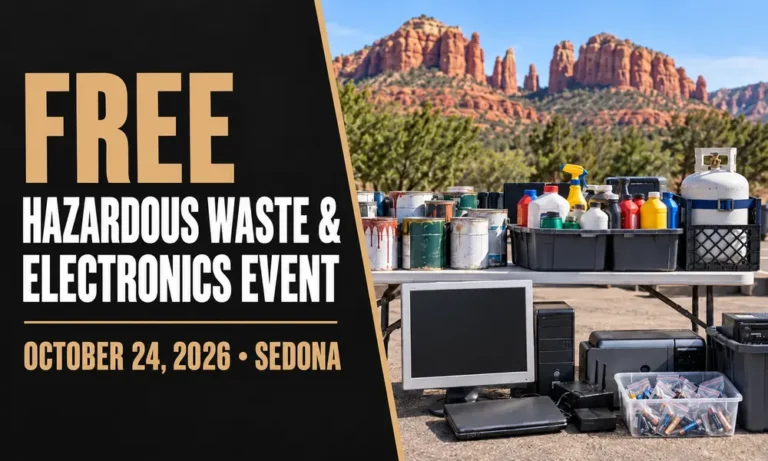
- Sedona household hazardous waste event (yearly): Open in past years to City of Sedona and unincorporated Yavapai County residents. Watch the City of Sedona waste collection page for the next date, or call the sustainability office at (928) 203-5060.
- Anywhere else: Enter your ZIP at the Battery Network locator and check each site's accepted list.
How Bella Junk Removal handles batteries
We can take some batteries as part of a junk removal job. Text us a photo or call (928) 395-6441 and we will let you know. We cannot take batteries that are damaged, swollen, leaking or hot.
Before a cleanout, walk the space with a box and a roll of tape and set batteries aside. If you are planning a garage cleanout, an estate cleanout or appliance removal, mention any batteries when you text us. Our guide to preparing for junk removal covers the rest, and our responsible disposal page explains how we sort loads, and our trash or recycle guide covers other household items. See our pricing page for how jobs are priced, or request a free estimate.
Frequently asked questions
Can I throw batteries in the trash in Arizona?
Only plain alkalines, which the EPA says most communities allow (EPA). Lithium, rechargeable and vape batteries should not go in the trash, and car batteries are illegal in Arizona landfills (A.R.S. 44-1322).
Can batteries go in my curbside recycling cart?
No. Batteries can be crushed during sorting and start fires, and a recycling symbol on a battery does not mean it goes in your cart (EPA Li-ion FAQ).
Do I really need to tape batteries?
Yes for lithium, rechargeable, 9-volt and coin cells, so the contacts cannot touch metal and spark (EPA). Plain alkalines usually do not need it (The Battery Network).
What should I do with a swollen phone or laptop battery?
Stop using and charging it, set it in sand or kitty litter in a non-metal container away from anything flammable, and call the maker. Never put it in the trash or a retail bin (Battery Safety Now).
Where can I recycle a car battery in the Verde Valley?
Auto parts stores in Camp Verde and Cottonwood often recycle car batteries, and Arizona law requires battery sellers to take back the type they sell (A.R.S. 44-1323). Policies change, so call the store or your local transfer station first.
How do I get rid of an e-bike battery?
Start with the manufacturer or dealer. The Battery Network runs an e-bike program for participating brands (The Battery Network), and many retail bins are not set up for packs this size.
How should I dispose of a disposable vape?
Take it to a household hazardous waste collection. The lithium battery can start fires and the nicotine is toxic (EPA).
Is a dead battery still dangerous?
It can be. Batteries can hold enough energy to start a fire even when they seem drained, so tape it, store it cool and drop it off (EPA).
Sources
- Battery Safety Now: The Facts, FAQs, Damaged Batteries
- U.S. EPA: Used Household Batteries, Used Lithium-Ion Batteries, Lithium-Ion FAQ, E-Cigarette Disposal
- Arizona: A.R.S. 44-1322, A.R.S. 44-1323, ADEQ battery management
- Local: Town of Clarkdale, City of Sedona, Yavapai County Solid Waste, City of Cottonwood Transfer Station
- The Battery Network, O'Reilly Auto Parts, Home Depot