Quick answer
DIY junk removal can save money on a small, light load if you already own a truck, live close to the transfer station, and have a free weekday. For anything bigger, like a garage full of junk, the hidden costs pile up: truck rental and mileage, gas, fees by the yard, extra stops for items the transfer station won't take, nails in your tires, a scratched truck bed, a car wash, a full day or two of your time, and the risk of a back injury that costs you work.
Skim the two lists below. Each item links to a section that explains it in more detail.
Pros of DIY junk removal
- Lower out-of-pocket cost on small loads. If it's one light trip in a truck you own, you may only pay a transfer station fee and some gas. See when DIY makes sense
- You set the schedule. Work an hour here and there instead of booking an appointment. See when DIY makes sense
- You decide what goes. Sorting as you load lets you catch the box of photos before it ends up in the truck. See safety and sorting tips
- You can sell or give things away. Usable items can bring in a little cash or help a neighbor. See the donation stop
- It's good exercise if you're healthy. Some people enjoy the work and the feeling of a cleared garage. See safe-lifting tips
- No strangers on your property. You handle everything yourself. See when DIY makes sense
Cons of DIY junk removal
- Truck rental fine print. Time limits, mileage charges, deposits, and refueling rules add up. See hidden costs
- Borrowing a friend's truck. Any nail, scratch, or dent becomes your problem. See vehicle damage
- Gas for every trip. A loaded truck burns more fuel, and most cleanouts take more than one trip. See hidden costs
- Fees by the yard or the item. Heavy debris, mattresses, appliances, and tires usually cost extra. See hidden costs
- Several stops, not one. Fridges, tires, batteries, paint, metal, and donations often each need a different drop-off. See items the dump won't take
- Limited hours. The Camp Verde Transfer Station is closed Sundays and Mondays. See hidden costs
- Extra trips. A garage rarely fits in one pickup load. See hidden costs
- Nails and screws in your tires. Transfer station lanes collect sharp debris. See vehicle damage
- Scratched bed and paint. Loading furniture and scrap over the bed rail scrapes trucks fast. See vehicle damage
- Mud and a car wash. After any moisture, transfer stations can be muddy. See vehicle damage
- Straps, tarps, and a ticket risk. Arizona law requires a secured load. See securing your load
- Back strains and hernias. Bending, twisting, and lifting all day is how people get hurt. See lifting injuries
- Cuts, crushed fingers, and falls. Broken glass, old nails, slipping dressers, and tailgates. See lifting injuries
- Dust, rodents, and spiders. Boxes that sat for years can hold more than junk. See lifting injuries
- Your whole weekend. Sorting, loading, driving, waiting, unloading, and repeating. See hidden costs
- Missed work if you get hurt. A sore back on Saturday can mean no shift on Monday. See real stories
- Medical bills. Urgent care, imaging, or physical therapy after an injury. See lifting injuries
- Hazardous items you can't haul. Wet paint, chemicals, fuel, and propane need special handling. See items the dump won't take
The DIY true-cost calculator
Use this like a calculator. All dollar amounts are examples only, not quotes. Swap in your own numbers. "Smooth" means you own a truck and nothing goes wrong. "Rough" means you rent a pickup, add a stop or two, pick up a nail, and tweak your back.
| Line item | Smooth (example) | Rough (example) |
|---|---|---|
| Truck or trailer rental (1) | $0 | $60 |
| Rental mileage (2) | $0 | $48 |
| Gas (3) | $12 | $18 |
| Transfer station fees (4) | $72 | $150 |
| Fridge or freezer fee (5) | $0 | $40 |
| Tire disposal fee (6) | $0 | $10 |
| Extra stops: tire yard, battery, metal, donation (7) | $0 | $15 |
| Tire damage (8) | $0 | $150 |
| Car wash (9) | $0 | $20 |
| Straps and tarp (10) | $30 | $30 |
| Gloves, bags, dust masks (10) | $25 | $25 |
| Your time at $25/hr (11) | $200 (8 hrs) | $350 (14 hrs) |
| Lost work if you get hurt (12) | $0 | $400 |
| Medical costs (13) | $0 | Your copay or deductible |
| Example total | $339 | $1,316 plus medical |
Bella Junk Removal: one price that covers loading, hauling, the extra stops, and sweep-up. We confirm price on site before we load. Heavy materials like concrete or dirt are quoted separately. See current rates on our pricing page.
Notes on the example numbers
- Home Depot lists flatbeds and vans from $19 for the first 75 minutes, then a charge every 15 minutes. U-Haul lists its 8-foot pickup at $19.95 a day plus mileage and fees. Rates vary by store.
- Example: 40 miles at $1.19 a mile, the per-mile rate in U-Haul's own sample quote. Your local rate may differ. Home Depot says it has no extra mileage fee.
- About 15 mpg loaded at Arizona's average of about $4.50 a gallon (AAA, Oct 27, 2026). The rough column adds miles for extra stops.
- Example only. Transfer stations usually charge by volume or weight, and heavy debris costs more. Fees vary, so call ahead.
- Example only. Posted fees for appliances with refrigerant often run roughly $10 to $70 depending on the facility, so call ahead. See the fridge section below.
- Example only. Tire fees often depend on size and whether the tire is still on the rim.
- Example only: a little extra gas and time for the tire yard, an auto parts store, a scrap recycler, or a thrift store.
- AAA puts a professional tire repair at $25 to $75 and a replacement tire at $150 to $400 or more.
- Muddy lanes after any moisture. A wash can easily run $20.
- Example cost if you don't already own them.
- Use your own wage or what your Saturday is worth to you. Add your helper's time too.
- Example: 2 shifts x 8 hours x $25.
- Depends on your plan.
The point isn't that DIY always costs $1,316. It's that a "cheap" dump run has a lot of line items, and a few of them can go sideways without warning.
Hidden costs, explained
Truck rental and mileage
The advertised rate is the starting point. Home Depot's rental page lists $19 for the first 75 minutes on flatbeds and vans, a fixed charge every 15 minutes after that, a refundable deposit (typically $150), proof of insurance, and a full tank on return. U-Haul's pickup starts at $19.95 a day plus mileage and fees. A cleanout that runs long runs up the clock. If you use your own truck, the IRS business mileage rate for the second half of 2026 is 76 cents a mile, a fair yardstick for what driving really costs once you count wear and tear.
Gas
A loaded truck burns more fuel, and every extra stop adds miles. With Arizona averaging about $4.50 a gallon this week, two or three trips add up.
Transfer station fees and hours
Fees are usually by volume or weight. Heavy material like concrete, rock, and roofing typically costs more than household trash, and mattresses, appliances, and tires often have their own per-item fees. Fees change, so call ahead or check the Yavapai County Solid Waste page before you load.
The Camp Verde Transfer Station (2600 E. Hwy 260, about 7 miles east of I-17) is open 8 a.m. to 4 p.m., Tuesday through Saturday, and closed on county holidays, including the day after Thanksgiving. Phone: (928) 713-8910. The Cottonwood Transfer Station (1500 W. Mingus Ave.) is open 7 a.m. to 5 p.m., Monday through Saturday, and closed Sunday. Phone: 928-531-0255 (City of Cottonwood). If your free day is Sunday, neither one is open.
Extra trips
Almost everyone underestimates how much fits in a pickup bed. A garage full of junk often means two, three, or more loads, plus the side trips covered in the several stops section.
Your time
Sorting, loading, tying down, driving, waiting in line, unloading, driving back, and doing it again. Multiply your hours by what an hour is worth to you, and don't forget your helper.
Lost work and medical bills
If you strain your back on Saturday, you may not be lifting anything at work on Monday. Add any urgent care visit, imaging, or physical therapy. The injuries section covers how long recovery can take.
One load, several stops: items the dump won't take
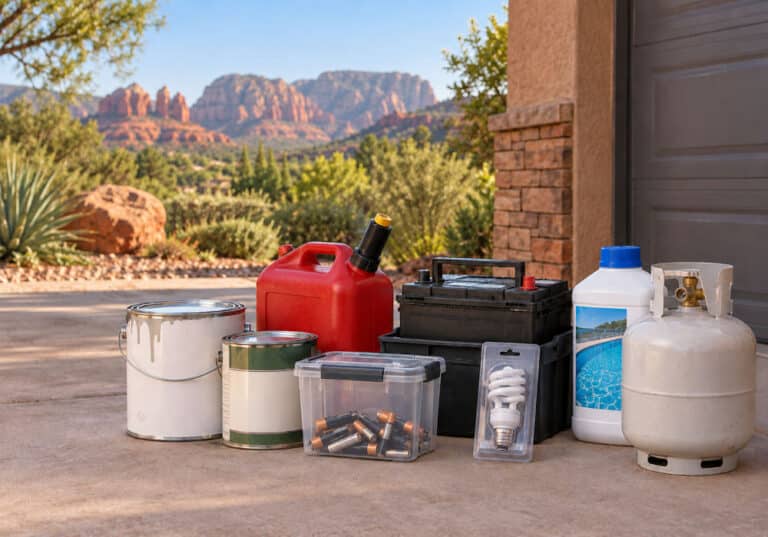
This is the cost almost nobody plans for. A typical garage isn't one kind of junk. It's a mix of furniture, boxes, an old fridge, a couple of tires, dead batteries, paint cans, scrap metal, and things worth donating. Transfer stations and landfills often take only some of that, and the rest has to go somewhere else. Policies change often, so call each place before you go.
Refrigerators, freezers, and AC units
Fridges, freezers, and window AC units usually reach the end of their life with refrigerant still inside. Federal rules make the final stop in the disposal chain, like a scrap recycler or landfill, responsible for making sure that refrigerant is recovered first (EPA). That's why only certain facilities take them, and why there's often an extra fee.
How much? Posted fees for appliances with refrigerant often run roughly $10 to $70 depending on the facility, based on one survey of posted fees at 25 facilities in 12 states (NearestDump.com). Call ahead to confirm the current fee where you plan to go. Yavapai County's posted fee sheet lists a separate, higher fee for appliances with refrigerant than for those without. And not every drop-off takes them: Cottonwood's free resident clean-up events have listed freon appliances as not accepted (Signals AZ). If a fridge is part of your load, plan on at least two stops and an added cost.
Tires
Arizona law generally prohibits putting waste tires in landfills, and each county has to provide at least one waste tire collection site (A.R.S. 44-1304). In Yavapai County, that means a trip to a tire yard, like the Camp Verde Waste Tire Yard at 2600 E. Hwy 260, open Wednesday through Friday, 8 a.m. to 4 p.m., (928) 713-2273 (Yavapai County). The county's fee sheet has separate fees for passenger tires with and without wheels, off-road and semi tires, and other tires that are weighed. Cottonwood's free resident clean-ups have also turned away rimmed tires and car and truck tires.
There's a cheaper option if you're buying new tires anyway: Arizona tire sellers must accept old tires from customers, up to the number of new tires sold (A.R.S. 44-1302).
Rechargeable batteries
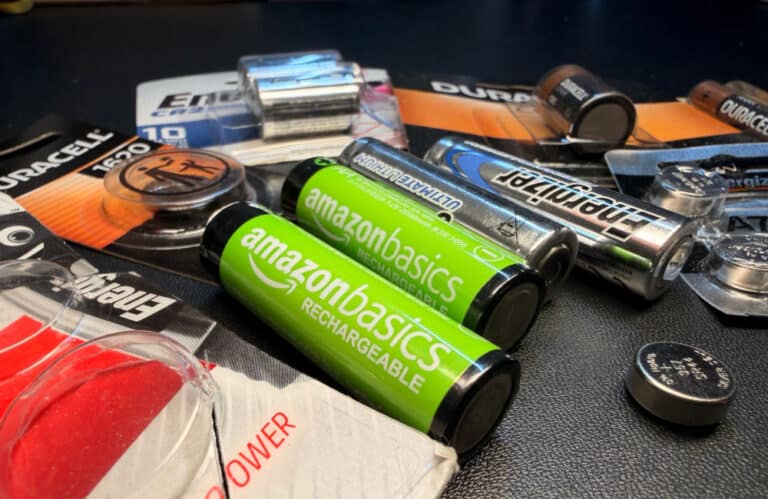
Lithium-ion and other rechargeable batteries should never go in the trash, because crushed batteries can start fires. That's another stop, often a home improvement store collection bin. The Cottonwood Home Depot lists rechargeable battery recycling for undamaged batteries, usually with size limits. Our guide to disposing of batteries safely in the Verde Valley covers each type and where to take it.
Car batteries
Arizona bans lead-acid batteries from landfills (A.R.S. 44-1322), so the old battery on the garage shelf needs its own stop. Auto parts stores are the usual answer. O'Reilly's Camp Verde and Cottonwood store pages list battery recycling. AutoZone's Camp Verde (992 W. Finnie Flat Rd.) and Cottonwood (1199 E. Hwy 89A) store pages also list free battery recycling, AutoZone says limits and exclusions apply, such as a daily limit per customer, and it may offer a store credit (AutoZone). Call the store first.
Scrap metal
Old bike frames, shelving, grills, and metal patio furniture can be recycled. Tossing recyclable metal into the landfill wastes it. Doing it right means another stop at a scrap recycler, with its own hours and rules. At Bella, we separate metal for recycling on our jobs.
Paint, chemicals, fuel, and other hazardous waste
Most garages have some. Wet paint, solvents, pesticides, pool chemicals, and fuel don't belong in a junk load or a transfer station bin. The City of Sedona tells residents to dry out latex paint with cat litter or sawdust before trashing it. Oil-based paint and chemicals are harder. We couldn't verify a year-round household hazardous waste drop-off in Yavapai County, so many residents wait for a seasonal collection event. Our hazardous waste disposal guide walks through each item.
Propane tanks
Never put a propane cylinder in the trash, a dumpster, or a transfer station bin. A propane supplier or exchange program may take a serviceable cylinder. Call first. Full propane tanks are on our own do-not-haul list too.
Electronics and old TVs
Older tube TVs and monitors contain lead, which is why they need special handling (EPA). Electronics often mean another stop at a retailer recycling program or a collection event, and some charge fees for certain items. Back up and wipe personal data first.
Mattresses
Transfer stations often charge a per-mattress fee, and many donation programs won't take them at all. For example, Goodwill of Central and Northern Arizona says it can't pick up any mattress or box spring, including futons and sleeper sofas (Goodwill Arizona).
Yard waste
Brush and green waste often have their own rate or their own pile. Yavapai County lists a separate green waste rate and runs free slash events at times. Call ahead for size limits.
Concrete, dirt, and other heavy materials
Concrete, rock, and dirt are heavy and often cost more. Yavapai County groups concrete and rock with construction debris at a higher rate, and Cottonwood's resident clean-ups have excluded concrete, rocks, and dirt. A pickup also hits its weight limit long before the bed looks full. If you hire us, heavy materials are quoted separately.
Donations
Donating usable items is the right move, but it's its own trip. Donation centers take drop-offs during store hours, and they often turn down items that are broken, stained, or worn. Goodwill of Central and Northern Arizona's guidance, for example, lists broken or stained furniture, large appliances, mattresses, and hazardous materials among things it can't accept (Goodwill Arizona). Our guide to getting rid of junk for free or almost free in the Verde Valley lists more options.
Add it up: a single garage cleanout can mean the transfer station, a tire yard, an auto parts store, a battery bin, a scrap recycler, and a thrift store. That's a lot of driving for one Saturday. When you hire Bella, we make those stops so you don't.
Lifting injuries: the cost that can outweigh everything else
If you hurt your back lifting a heavy object, you're in a lot of company. According to MedlinePlus, from the National Library of Medicine, back pain often starts right after lifting something heavy or moving suddenly. Acute back pain can last from a few days to a few weeks. Many people feel better within a week, and most improve within 4 to 6 weeks. MedlinePlus also advises avoiding heavy lifting and twisting for the first 6 weeks after the pain starts (MedlinePlus). That's six weeks of not finishing the garage.
Workplace data gives a sense of the time lost. In 2024, private employers reported 888,100 injury cases that involved days away from work, with a median of 8 days away. Sprains, strains, and tears accounted for 568,150 of those cases, and 248,180 involved the back (Bureau of Labor Statistics). That's workplace data, not homeowners, but the injuries are the same kind a garage cleanout can cause.
Heavy furniture is also dangerous when it moves the wrong way. The Consumer Product Safety Commission estimates about 17,800 emergency room visits a year (2020 to 2022) from TVs, furniture, and appliances tipping over, with furniture involved in 82 percent. Shelving units, bookcases, and cabinets, the same things that fill a lot of garages, were among the most common (CPSC). That report covers tip-overs in general, not moving, but a top-heavy cabinet being walked across a garage is exactly when they tip.
Common DIY injuries:
- Back strains and spasms from bending and twisting over boxes all day.
- Hernias from lifting appliances or heavy furniture.
- Cuts and punctures from broken glass, sheet metal, and old nails in scrap wood.
- Crushed fingers and toes when a dresser or appliance slips.
- Falls off tailgates and out of truck beds, especially when unloading.
Dust, rodents, and spiders
Garages and sheds are prime spots for mice and spiders. Arizona had 7 confirmed hantavirus cases in 2025, including 4 deaths, mostly in northern counties, and the Arizona Department of Health Services lists garages and sheds among the places to be careful (ADHS). Don't sweep or vacuum droppings. Air the space out for 30 minutes, spray droppings with disinfectant or a 1-to-9 bleach solution, let it soak, and wipe up with gloves on (CDC).
Junk removal isn't rocket science, but it does take skill and safety know-how. People get hurt doing home projects all the time.
Vehicle damage: what a dump run does to your truck
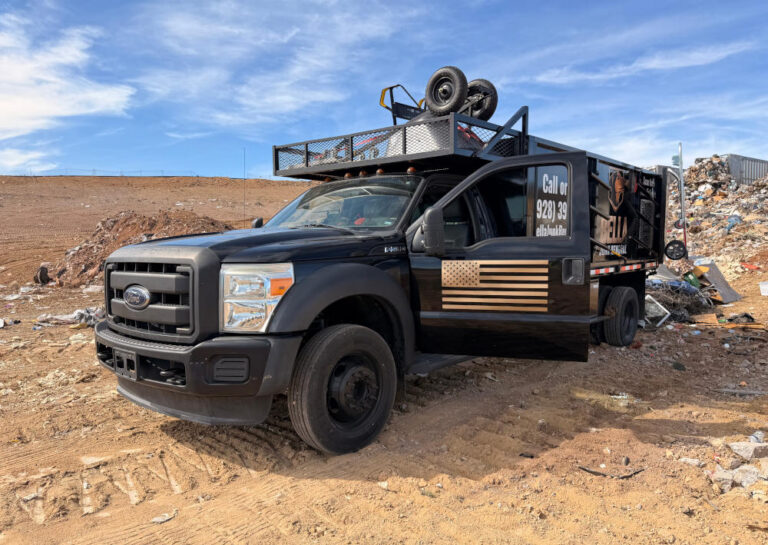
This part comes straight from running junk trucks every day.
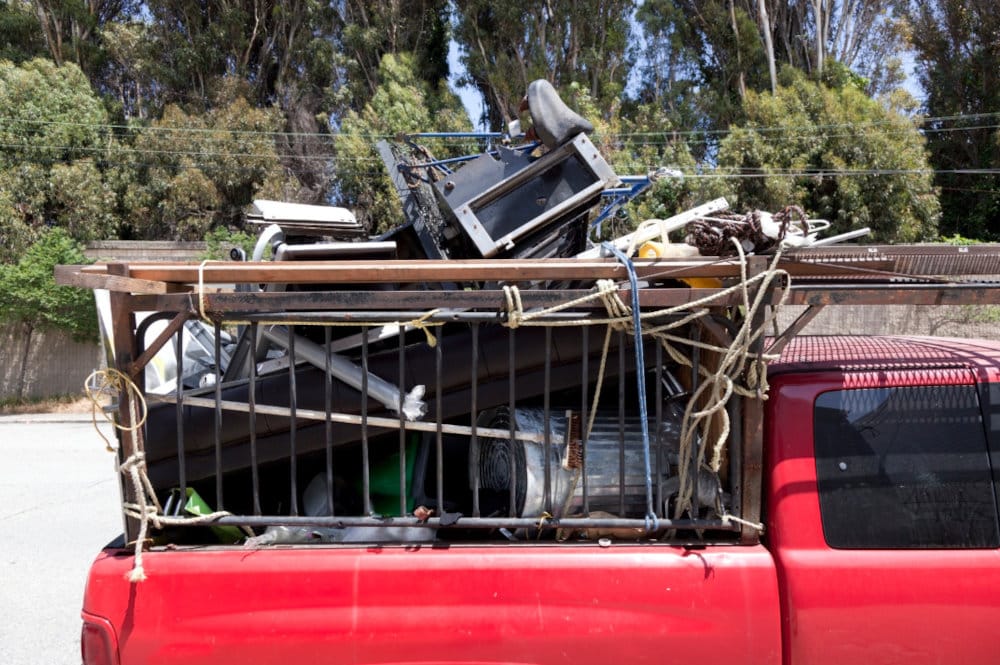
- Tires. We pick up nails and screws at dumps and transfer stations all the time, and we deal with tire damage from those runs most months. If you take one load a year, you may never get a nail. If you take three loads in a weekend, the odds go up. AAA notes that a puncture in the sidewall can't be repaired, so that tire has to be replaced (AAA).

- The bed. Old furniture, scrap wood, and metal shelving scratch and gouge a truck bed fast. If you're particular about your truck, put down a bed mat or plywood first.
- The outside. Sliding a dresser or a bundle of lumber over the bed rail is how paint gets scraped. Nate, Bella's owner, has put scratches on the outside of a truck just trying to get stuff into the inside.

- Mud. Transfer stations can be muddy whenever there's moisture. Plan on a car wash, which can easily cost $20.
- Suspension and hitch. Heavy debris overloads a half-ton pickup or a small trailer quickly. Check your payload rating before you load.
- Someone else's truck. If you borrow a friend's pickup, any nail, scratch, or dent is now your problem, and the friendship's.
Securing your load: Arizona law and road debris
Arizona law (A.R.S. 28-1098) says a load and any covering on it must be securely fastened so nothing can come loose or become a hazard. A first violation with no damage or injury can bring a civil penalty of up to $250, up to $350 for a repeat within five years, up to $500 if it causes serious injury, and up to $1,000 if it causes a death (Arizona Legislature).
It's a real problem here. In 2023, ADOT's state engineer said its incident response units handle an average of 46 calls per week for debris blocking Arizona highways, including washers, refrigerators, couches, and ladders (Cronkite News). Nationally, the AAA Foundation for Traffic Safety estimates road debris played a part in about 53,000 crashes, 5,500 injuries, and 72 deaths a year from 2018 to 2023, with furniture among the common cargo items (AAA Foundation).
If you haul it yourself, strap heavy items down, tarp anything loose, and check the load after the first mile.
What can go wrong: real stories
These come from our own customers and from public forum posts. Forum stories are paraphrased, with links to the original threads.
One of our customers. A customer decided to try a cleanout themselves, hurt their back, and called us to finish the job. They've missed at least a day of work so far, possibly more. Between the lost pay and the cleanout they paid for anyway, the DIY attempt ended up costing more than hiring help from the start.
Four nails and $180 after one dump run. A Reddit user in Saskatchewan paid $98 at the landfill with his trailer, then found four nails and pieces of metal in his tires. Fixing them took about two hours and $180. Another commenter got two flats from screws after a single run and said hiring a pickup service next time would be cheaper and more convenient. A former dump worker explained that bulldozers can't push small nails and thin metal into the pile, so they stay on the driving surface (r/regina).
"6-7 out of 10 times." In a Wichita thread, a regular landfill user said they have to plug a tire most of the times they go. Another person dumped old carpet and came home with a sidewall puncture. To be fair, someone else in the thread made a dozen trailer trips with no flats (r/wichita).
A weekend decluttering spree, then back spasms. One r/declutter user spent a weekend bending, sorting, and twisting to toss items into piles. Their back went into spasm, and they needed liniment and painkillers. Others replied that big decluttering pushes had laid them up for a full day (r/declutter).
Rent a truck, find a friend, or hire it out. In a Seattle thread, a homeowner who hired junk removal said it was far more convenient than renting a truck and lining up a friend. Another said you can definitely do it cheaper yourself, but it's a lot of work (r/SeattleWA).
A load that came off on the highway. In a widely reported 2004 case in Washington, part of an entertainment center flew off a rented trailer and through a driver's windshield, leaving her blind. The case led to the state's "Maria's Law" on unsecured loads (Seattle Times). Cases like that are rare, but they're why securing your load matters.
When DIY junk removal makes sense
We'd rather you make the right call than book a job you don't need. DIY is a good fit when:
- It's a small, light load, like a few bags, some boxes, or a broken chair.
- You own a truck or trailer and don't mind a few scratches.
- Everything can go to one place, with no fridge, tires, batteries, paint, or propane in the mix.
- You can go on a day the transfer station is open, ideally a weekday.
- Nobody in the house has a bad back, a recent injury, or a job that depends on lifting.
- You have a helper for anything you can't comfortably carry alone.
- You have time to spread the work over several days and enjoy it.
For a single bulky item or a small pile, you may not need a full cleanout. If you'll be filling it over several days, a dumpster might be the better tool. We compare them in junk removal vs. dumpster rental.
How to clean out a garage yourself, safely
If you're going to do it, do it well.
Plan it
- Call each drop-off first. Confirm hours, fees, and what they won't take.
- Sort into keep, donate or sell, recycle, special stops, and haul. Do it before anything goes in the truck.
- Pull out hazards. Set aside paint, chemicals, propane, batteries, and anything that leaks.
- Go one wall or one corner at a time. Not the whole garage in a day.
Gear up
- Work gloves, closed-toe boots, long sleeves, and safety glasses.
- A dust mask, especially for boxes that sat for years.
- A hand truck or appliance dolly for anything heavy.
- A bed mat, plywood, or old blankets to protect the truck.
- Ratchet straps and a tarp.
Lift right
- If it's too heavy or awkward, get help. A common workplace rule of thumb is a two-person lift for anything over 50 pounds, longer than 4 feet, or that you can't hold close (Wayne State University).
- Test the weight first by tipping or nudging it.
- Feet wide, get close, bend at the knees, and keep the load against your body (MedlinePlus).
- Don't twist while lifting. Turn with your feet.
- Watch your fingers when you set things down.
- Take breaks. Fatigue causes a lot of injuries.
At the transfer station
- Back up close to the pile so you're not dragging debris across the lane.
- Stay away from the metal pile and watch for nails on the way out.
- Don't stand on the tailgate edge to unload.
- Check your tires before you get back on the highway.
Our guide to preparing for junk removal has more sorting tips, whether you haul it yourself or call us.
When to hire junk removal instead
Hiring usually makes more sense when:
- It's a full garage cleanout or a garage full of junk, not a few items.
- The load would take several stops: a fridge, tires, batteries, metal, or donations.
- There are heavy or awkward pieces like appliances, gym equipment, dressers, or a hot tub.
- You'd need to rent or borrow a truck.
- A missed shift would cost you more than the job.
- You have a back, knee, or shoulder issue.
- You're moving and short on time. See our guide to furniture removal before moving.
What you get with Bella Junk Removal:
- No lifting, no dump runs, no missed work. We carry items from wherever they sit, load them, haul them, and sweep up.
- We make the extra stops. We separate metal for recycling, route usable items to donation or resale, and take care of the items that need special handling.
- We confirm price on site before we load. Heavy materials like concrete or dirt are quoted separately.
- Same-day or next-day availability when scheduling allows.
- Insured. We carry $1M in general liability coverage.
- Local. We're based in Camp Verde and work across the Verde Valley.
Ready to get your garage back? Check our garage cleanout service, see how pricing works, or request a free estimate. You can also call us at (928) 395-6441. Send a few photos and we'll give you a starting estimate.
FAQ
Is DIY junk removal cheaper than hiring a company?
For a small, light load and a truck you own, usually yes. For a full garage or anything heavy, it often comes out close once you count truck rental, mileage, gas, fees, extra stops, tire risk, a car wash, and your time. One injury can flip the math completely.
How much does junk removal cost?
Most companies price by how much truck space your items take up, plus extra for heavy materials. Bella's current rates are on our pricing page, and we confirm the price on site before we load. For DIY, use the calculator table above.
Can I take a refrigerator to the dump?
Sometimes, but only certain facilities take them, and there's often an extra fee because the refrigerant has to be recovered first. Call ahead, and expect it to be a separate stop from the rest of your load.
Can I throw old tires in with my junk?
Usually not. Arizona generally bans tires from landfills, so they go to a county tire yard or back to a tire seller when you buy new ones. Fees often depend on tire size and whether it's on a rim.
How do I clean out a garage by myself?
Call each drop-off first, sort into keep, donate, recycle, special stops, and haul piles, pull out hazardous items, work one section at a time, use a dolly for heavy items, and secure your load. See the step-by-step section above.
What should I do if I hurt my back lifting a heavy object?
MedlinePlus suggests reducing activity for the first couple of days, using ice and then heat, and staying gently active rather than resting in bed. Avoid heavy lifting for about six weeks. See a doctor right away for numbness, leg weakness, loss of bladder or bowel control, fever, or pain after a fall. This isn't medical advice, so check with your provider.
Do I have to tarp or strap my load in Arizona?
Yes. A.R.S. 28-1098 requires loads and coverings to be securely fastened. Penalties start at up to $250 and go higher if someone is hurt.
Can a dump run damage my truck?
It can. Nails and screws on transfer station lanes cause flats, loading debris scratches beds and paint, and mud means a car wash. Bed mats, careful loading, and avoiding the metal pile help.
Is it better to rent a dumpster or hire junk removal?
A dumpster can work for multi-day projects if you're able to do the loading, but it has its own limits on what goes in. Junk removal is better when you want it gone in one visit without lifting. See junk removal vs. dumpster rental.
Can I get rid of junk for free in the Verde Valley?
Sometimes. Free listings, donation drop-offs, and county clean-up days can help. See how to get rid of junk for free or almost free in the Verde Valley.
Sources
- Arizona Legislature, A.R.S. 28-1098 (vehicle loads)
- Arizona Legislature, A.R.S. 44-1302 (tire sellers accept waste tires)
- Arizona Legislature, A.R.S. 44-1304 (waste tire disposal)
- Arizona Legislature, A.R.S. 44-1322 (lead acid batteries)
- U.S. EPA, Stationary Refrigeration Safe Disposal Requirements
- U.S. EPA, Cathode Ray Tubes
- NearestDump.com, What Dumps Charge for a Mattress or Fridge
- Signals AZ, City of Cottonwood Spring Clean-Up 2024
- City of Cottonwood, Transfer Station
- Yavapai County Solid Waste Division
- AutoZone, Free Recycling for Oil and Batteries
- AutoZone Camp Verde store
- AutoZone Cottonwood store
- Goodwill Arizona, Home Pickup
- Goodwill Arizona, Where to Donate Household Items
- Cronkite News, "Arizona officials warn motorists to 'Secure Your Load'" (June 6, 2023)
- AAA Foundation for Traffic Safety, The Safety Impact of Road Debris, 2018 to 2023
- Seattle Times, "Woman hit by unsecured load awarded $15 million" (Nov 10, 2007)
- U.S. Bureau of Labor Statistics, Injuries, Illnesses, and Fatalities
- U.S. Consumer Product Safety Commission, 2023 Tip-Over Report
- MedlinePlus, Low back pain, acute
- Wayne State University OEHS, Safe Lifting
- CDC, How to Clean Up After Rodents
- Arizona Department of Health Services, hantavirus update (May 2026)
- AAA, Tire Plug vs. Patch
- The Home Depot, Truck Rentals
- U-Haul, Truck Rental Price vs. Cost
- AAA Gas Prices, Arizona (Oct 27, 2026)
- IRS, Standard mileage rates
- Reddit: r/regina, r/wichita, r/declutter, r/SeattleWA